The AI Era Runs on Liquid Cooling


The home of liquid cooling for AI at scale. From AI training and inference to GPU clusters and HPC, NEXTDC supports high-density deployments across APAC, from single environments to gigawatt-scale infrastructure.

Planning your next deployment? Book a Consultaiton with Rob Keegan, our AI & HPC Solutions Director.

The AI Era Powered on Liquid Cooling

The home of liquid cooling for AI at scale. High-density AI and HPC workloads are redefining data centre infrastructure. NEXTDC combines proven liquid cooling expertise with high-density power, connectivity and partner-neutral infrastructure to help you deploy with confidence. 


1+MW
High-density deployment capability
10+ Years
Liquid cooling experience
AI + HPC
Specialist infrastructure expertise
Gigawatt Scale
Built for future growth

Why NEXTDC Is the Home of Liquid Cooling


More than a decade of liquid cooling experience. Proven in live data centre environments.


NEXTDC has built deep engineering and operational expertise supporting increasingly dense AI and HPC workloads across our network. Working with a broad ecosystem of technology and infrastructure partners, we bring together power, cooling, connectivity and high-density data centre infrastructure to support the next generation of AI across APAC.


MORE THAN A DECADE

M1 Melbourne

Long-standing experience supporting liquid-cooled deployments in live data centre environments.

MULTI-SITE CAPABILITY

Across Australia

Infrastructure designed to support liquid-cooled deployments across multiple NEXTDC data centres.

AI + HPC WORKLOADS, LIVE

Across the NEXTDC Network

Supporting GPU clusters, AI training and inference, HPC and advanced compute in high-density environments.

SCALING ACROSS APAC

Built for Regional Growth

Power, cooling and connectivity infrastructure designed to support high-density AI and HPC deployments across APAC.

Your Liquid Cooling Deployment Starts With
Six Questions


Before you specify racks, cooling or facility requirements, answer six critical questions to understand what’s viable today, where the constraints may be, and how far your deployment can scale tomorrow.

That reads more commercially and gives the six questions a clearer purpose.

What does your AI or HPC workload require from the data centre?

Understand the compute profile, deployment model and workload characteristics that will shape power, cooling, density and infrastructure requirements.

What rack density are you designing for from kW to MW-scale?

Define the power density you need today and the headroom required to support future GPU, AI and HPC growth.

How will your liquid cooling architecture integrate with the facility?

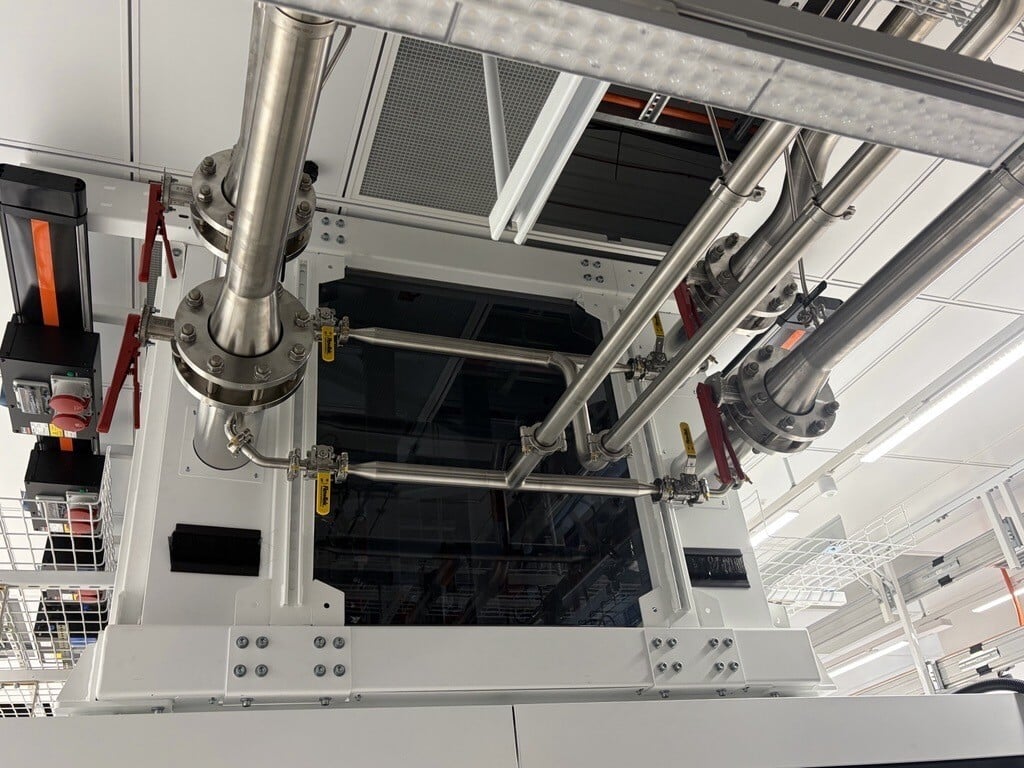
Determine how direct-to-chip, rear-door, immersion or hybrid cooling will connect with the data centre’s mechanical and thermal infrastructure

What power architecture is required to support the compute?

Assess the power capacity, redundancy and distribution needed to support high-density compute reliably as the environment scales.  answer at every site, and it affects both sustainability reporting and operating costs.

What connectivity and ecosystem services will the cluster depend on?

Map cloud, carrier, network and interconnection requirements to ensure the cluster can connect efficiently to the services and partners it depends on.

How will the environment need to scale as demand grows?

 Plan for future increases in compute, rack density, power, cooling and connectivity so today’s deployment does not constrain tomorrow’s growth. 
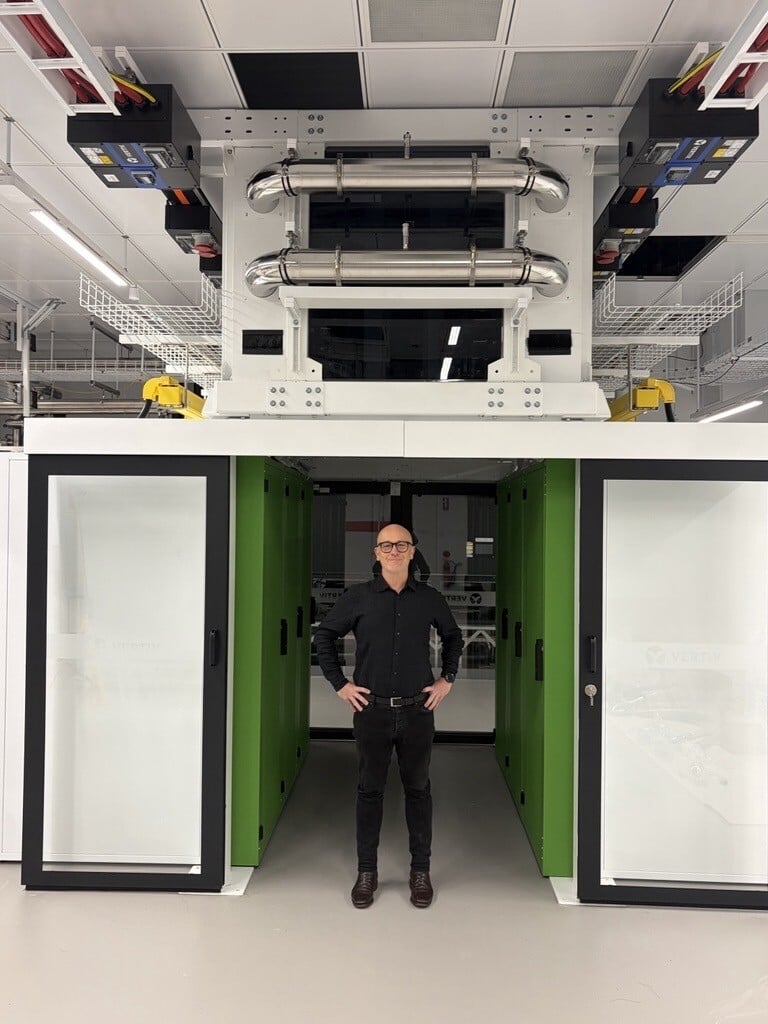
dlc-entrance-1
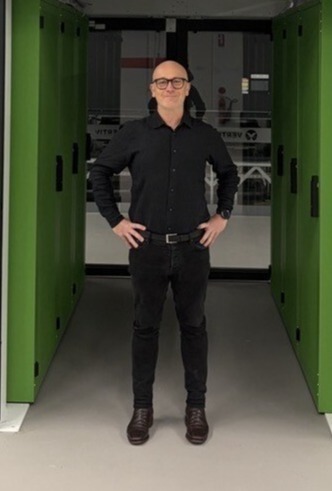
Robert Keegan
AI & HPC Solutions Director, NEXTDC

Your Liquid Cooling Strategy Starts with the Right Conversation

Rob Keegan, NEXTDC’s AI & HPC Solutions Director, works with enterprise, government and cloud infrastructure teams to translate complex AI and HPC requirements into practical data centre infrastructure decisions.

From GPU architecture and rack density through to liquid cooling, power, connectivity, resilience and scale, Rob helps customers pressure-test the assumptions that shape successful high-density deployments.

Planning a liquid-cooled AI or HPC deployment? Discuss your requirements with Rob.

That is stronger because it keeps the page tightly anchored to liquid cooling, while still showing Rob’s broader AI/HPC expertise.

A Partner-Neutral Ecosystem for AI Infrastructure at Scale

Liquid-cooled AI infrastructure requires coordination across compute, cooling, power, connectivity and facility infrastructure.


NEXTDC provides a partner-neutral data centre environment designed to support a broad range of technology choices helping customers bring together the infrastructure required for high-density AI deployments.


Bring your preferred compute, cooling and infrastructure technologies. NEXTDC provides the environment in which they come together.


Technology Choice Without Lock-In
Support for multiple compute, cooling and infrastructure platforms, giving customers the flexibility to design around their preferred architecture.
NVIDIA DGX-Ready
Certified to support standardised environments for NVIDIA DGX infrastructure, with the power, cooling and interconnection capabilities required for advanced AI deployments
Integrated in a Live Environment
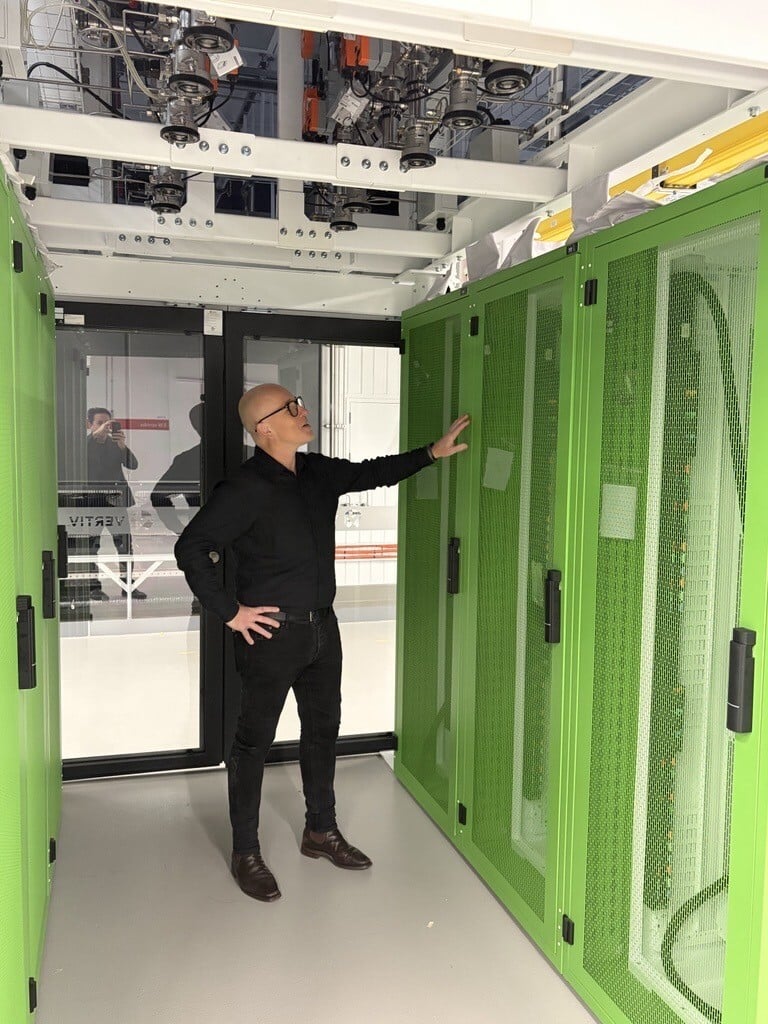
Specialist technologies can be brought together within NEXTDC’s operating data centre environment to help customers understand how compute, cooling and supporting infrastructure work together.
Access to the Right Expertise
Engage with NEXTDC and relevant technology specialists as requirements are defined across compute, rack density, power, liquid cooling, connectivity, resilience and scale.

A Partner-Neutral Ecosystem for AI Infrastructure at Scale

Liquid-cooled AI infrastructure requires coordination across compute, cooling, power, connectivity and facility infrastructure.


NEXTDC provides a partner-neutral data centre environment designed to support a broad range of technology choices helping customers bring together the infrastructure required for high-density AI deployments.


Bring your preferred compute, cooling and infrastructure technologies. NEXTDC provides the environment in which they come together. 



Technology Choice Without Lock-In
Support for multiple compute, cooling and infrastructure platforms, giving customers the flexibility to design around their preferred architecture.
NVIDIA DGX-Ready
Certified to support standardised environments for NVIDIA DGX infrastructure, with the power, cooling and interconnection capabilities required for advanced AI deployments
Integrated in a Live Environment
Specialist technologies can be brought together within NEXTDC’s operating data centre environment to help customers understand how compute, cooling and supporting infrastructure work together.
Access to the Right Expertise
Engage with NEXTDC and relevant technology specialists as requirements are defined across compute, rack density, power, liquid cooling, connectivity, resilience and scale.
Vertiv
Cooling infrastructure & coolant distribution units
Dell Technologies
Compute & AI server hardware
NVIDIA
GPU acceleration & DGX-Ready Data Centre certification
Castrol
Coolant fluid technology & thermal management
SRA Solutions
Systems integration & deployment
MODL
Modular liquid cooling solutions
A.G. Coombs
Mechanical & hydraulic services
Heyday Group
Electrical infrastructure & fit-out
Pure Piping
Pipework fabrication & installation


Book a Session with Rob

 Liquid Cooling for AI Infrastructure: Frequently Asked Questions

What is liquid cooling in a data centre and how does it work?

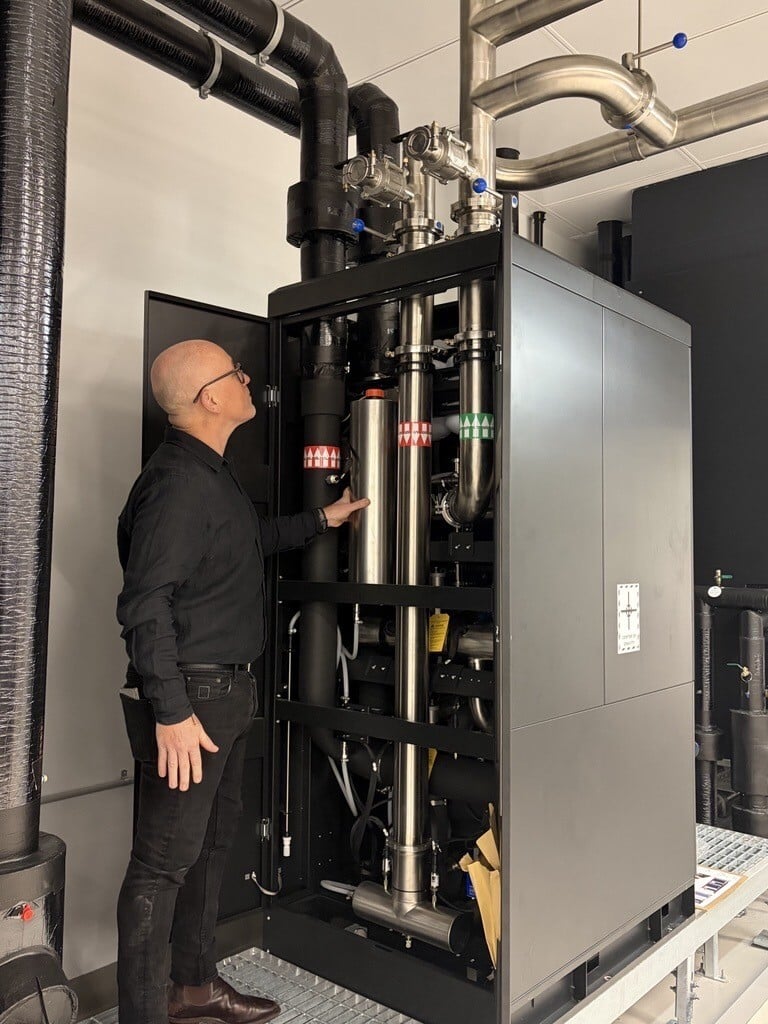
Liquid cooling removes heat from servers using a circulating fluid rather than air. Coolant is pumped to each rack, absorbs heat from high-density components such as GPUs and CPUs, then returns to a Coolant Distribution Unit (CDU) where that heat is transferred to the facility's broader cooling infrastructure. The IT-side loop is closed and isolated from the building's main water supply.

Why do AI workloads require liquid cooling?

Modern AI processors generate far more heat than air cooling can remove. Air cooling reaches its practical limit at around 30kW per rack. High-performance AI deployments routinely operate above 100kW per rack, with next-generation platforms expected to exceed 200kW. Liquid is approximately 60 times more efficient at transferring heat than air, making it the only viable option for dense AI infrastructure at scale.

What is direct-to-chip liquid cooling?

Direct-to-chip cooling routes coolant through a cold plate mounted directly on the surface of high-heat components, typically GPUs and CPUs. Heat is removed at the source rather than from the air surrounding the rack. This allows processors to run within their optimal temperature range, supports higher rack densities, and significantly reduces the load on room-level air conditioning systems.

Does liquid cooling use more water than air cooling?

Not necessarily. The coolant loop from the rack to the CDU is a closed system that does not consume water. Whether the facility uses water depends on how heat is rejected at site level, through cooling towers, dry coolers or chillers. Some facilities running direct-to-chip liquid cooling operate with no evaporative water consumption at all. The right question is not whether liquid cooling uses water, but how heat is ultimately rejected at your specific site.

What is the difference between air cooling and liquid cooling for data centres?

Air cooling uses fans and chilled air to remove heat from IT equipment. It is well understood and widely deployed, but becomes increasingly inefficient above approximately 30kW per rack. Liquid cooling uses fluid, which transfers heat approximately 60 times more efficiently than air at equivalent mass flow rates. For AI, HPC and other high-density compute environments, liquid cooling has become the standard approach because the heat loads involved simply cannot be managed any other way.

What rack densities can NEXTDC support with liquid cooling?

Air-cooled infrastructure reaches its practical limit at around 30kW per rack. NEXTDC is designing for rack densities up to 2MW as next-generation GPU hardware scales beyond what air can handle. Achievable density for a specific deployment depends on the hardware platform, power availability and site conditions. Engage early, design decisions at this stage have the most impact.

Where does NEXTDC currently operate liquid cooling?

NEXTDC operates liquid cooling infrastructure across six data centres in Australia, including M3 Melbourne, S3 Sydney, M2 Melbourne, S4 Sydney, S6 Sydney and A1 Adelaide. NEXTDC is expanding into APAC with KL1 Kuala Lumpur. The S3 Sydney facility hosts a live demonstration suite where customers can observe liquid cooling operating in a production environment. Additional deployments are underway across APAC, with future sites designed for liquid cooling from day one.

How do I evaluate liquid cooling for my deployment before committing?

NEXTDC operates a guided demonstration suite at S3 in Sydney where sessions are tailored to each visitor's hardware platform, target rack density and deployment context. The greatest decisions in any AI infrastructure project are made during the design phase, before hardware is ordered and rack layouts are finalised. Engaging early gives teams the most flexibility. Contact NEXTDC's AI and HPC Solutions Director to arrange a session.

What is the difference between direct-to-chip liquid cooling and immersion cooling?

Direct-to-chip liquid cooling routes coolant through a cold plate mounted on each processor and works with standard server designs from leading GPU manufacturers. Immersion cooling submerges entire servers in dielectric fluid and requires purpose-built hardware that most organisations are not currently deploying. Direct-to-chip is the dominant approach for enterprise and hyperscale AI deployments today. NEXTDC's liquid cooling infrastructure is built around direct-to-chip technology, enabling customers to deploy standard AI hardware at high-density across liquid cooled colocation facilities in Sydney, Melbourne and Adelaide and expanding into APAC.

 Planning a Liquid-Cooled AI or HPC Deployment?

Visit NEXTDC's DLC demonstration suite or speak directly with Rob Keegan, our AI & HPC Solutions Director, about your deployment requirements.